
Our Editorial Methodology
We believe that plant-based nutrition education must be built on rigorous research, transparent sources, and expert peer review. This page explains how we create, verify, and refine every article, recipe, and guide published by Healthy Cooking Mastery.
Our commitment: science-backed content that empowers you to make informed choices about plant-based eating.

The information on this site is for educational purposes only and does not constitute medical advice. Always consult a qualified healthcare professional before making health decisions.
Our Six-Step Content Development Process
Every article, guide, and recipe follows a structured workflow designed to ensure accuracy, depth, and relevance. Here's how we work:

Topic Selection & Research Brief
We identify topics based on reader interest, emerging plant-based nutrition research, and educational gaps in the field. Each topic undergoes an initial feasibility check: Is there sufficient peer-reviewed evidence? Are there multiple credible perspectives? What is the target audience knowledge level?
Our editorial team creates a detailed research brief that outlines scope, key questions to answer, target length, and primary source requirements.
Source Collection & Literature Review
Our researchers consult peer-reviewed journals, nutrition science databases (PubMed, Google Scholar), textbooks from accredited institutions, and expert publications. We prioritize systematic reviews, meta-analyses, and randomized controlled trials when available.
We maintain a growing library of vetted sources on plant-based nutrition, including publications from major universities and recognized nutrition organizations. All sources are dated and tracked for currency.
Initial Draft & Inline Citation
Our writers create the first draft, translating research findings into clear, accessible language without oversimplifying. Every factual claim is immediately cited with its source. We use structured templates to ensure consistency: clear headlines, digestible paragraphs, practical takeaways.
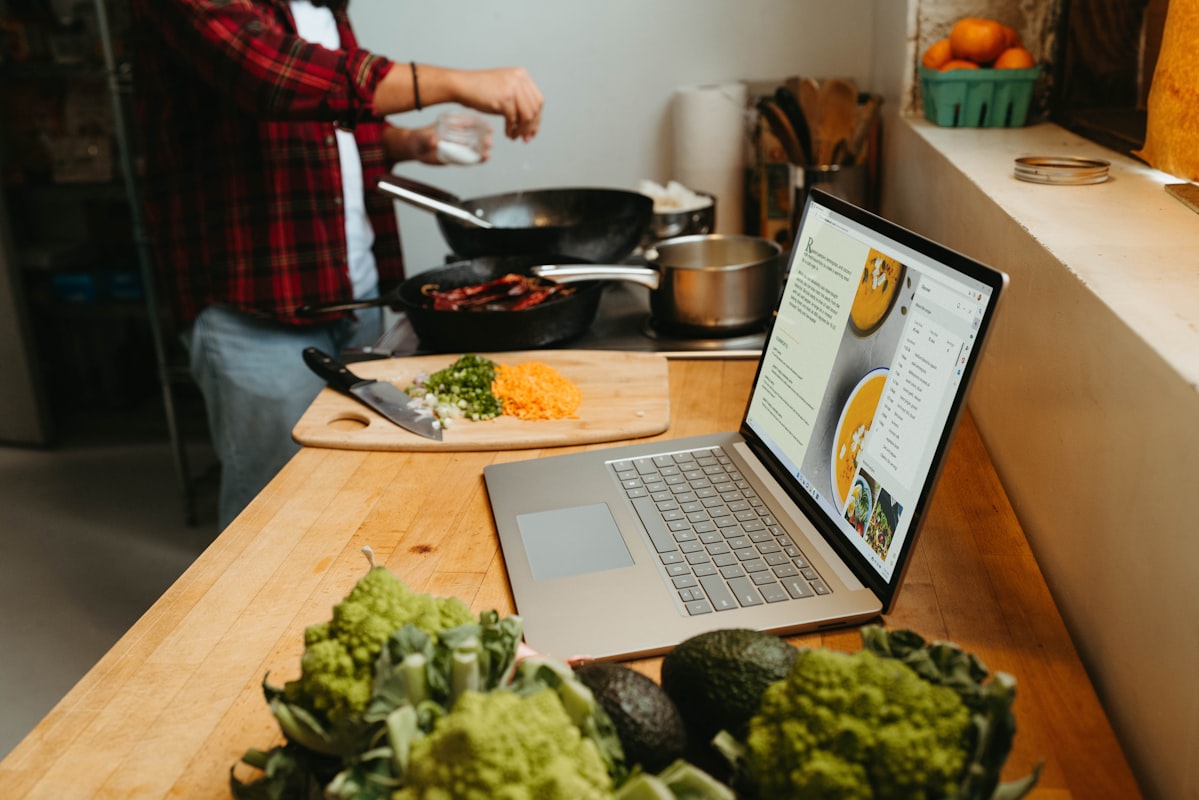
For recipes and cooking guides, we test preparation methods and ingredient combinations in our test kitchen to verify accuracy and feasibility for home cooks.
Editorial Review & Fact-Checking
A second editor reviews the draft for accuracy, clarity, and alignment with our editorial standards. This reviewer independently checks all citations, verifies data points, and assesses whether claims are proportional to available evidence. Any contradictions or weak citations are flagged for revision.
We also evaluate tone: Is the content accessible to our target audience? Are we avoiding unsupported health claims? Is the guidance practical and actionable?
Expert Peer Review
For specialized topics in plant-based nutrition, we submit the draft to external subject-matter experts—registered nutrition professionals with published research or recognized credentials. They review for scientific accuracy, completeness, and alignment with current evidence-based practice.
Expert feedback is documented and incorporated into the final revision. We acknowledge these reviewers in the article byline and maintain a public list of our peer reviewers on our About page.

Publication & Ongoing Maintenance
After approval, the article is formatted for our website with a clear publication date, updated date (if revised), author byline, and a transparent note about our editorial process. All sources are hyperlinked where possible so readers can access original research.
Published articles are reviewed annually. If new evidence emerges that contradicts or significantly updates our content, we revise the article and note the change date prominently. No old content is silently removed—we maintain editorial integrity by showing what we've learned.
Our Quality Assurance Checklist
Every published article meets these rigorous standards:
Accuracy & Evidence
- Source-backed claims: Every factual statement references a credible source (peer-reviewed journal, accredited textbook, or expert publication).
- Proportional language: We distinguish between well-established facts, emerging evidence, and ongoing research. No overstated conclusions.
- No unsupported health claims: We adhere to regulatory guidelines and avoid implying our content diagnoses, treats, or cures any condition.
- Currency check: Published research is dated and cross-referenced with recent findings (within 5 years where available).
- Conflict of interest transparency: If authors have financial ties to featured products or organizations, this is disclosed.
Clarity & Accessibility
- Plain language: Technical nutrition terminology is explained for a general audience. Jargon is minimized.
- Structured formatting: Articles use clear headlines, short paragraphs, bullet points, and visual breaks for readability.
- Practical takeaways: Each article includes actionable advice readers can apply to their plant-based cooking and eating.
- Accessibility compliance: Images include descriptive alt text; color contrast meets WCAG standards; articles are mobile-readable.
- Target audience match: Content depth and tone are calibrated to the intended reader knowledge level.
Integrity & Transparency
- Author credentials: Writer and reviewer qualifications are listed with each article so readers understand expertise level.
- Update transparency: Publication and update dates are visible. Revision notes explain what changed and why.
- Linked sources: Readers can click through to original research, books, and expert sources used in the article.
- Diverse perspectives: When reasonable disagreement exists in the field, we present multiple viewpoints fairly.
- Disclaimer clarity: Articles include a standard footer explaining that our content is educational and not a substitute for personalized professional advice.
Recipe Testing & Validation
- Multi-tester protocol: Every recipe is prepared at least twice by different people to ensure clarity and consistency.
- Ingredient sourcing: We verify that specialty ingredients are widely available or provide clear substitutions.
- Nutrition data: Nutritional information is calculated using USDA or verified food databases. Sources are cited.
- Dietary labels: Recipes are accurately labeled (vegan, gluten-free, nut-free, etc.) and potential allergens are flagged.
- Photography consistency: Recipe photos are taken under standard conditions to give readers realistic expectations of the final result.
Case Study: How We Created Our "Complete Plant-Based Proteins" Guide
A real-world example of our methodology in action:
Planning
Our editorial team identified a gap: readers frequently asked about plant-based protein completeness. We created a research brief asking: What makes a protein complete? Which plant foods contain complete proteins? What are common myths?
Timeline: 1 week
Research
We consulted 12+ peer-reviewed studies on plant protein bioavailability, textbooks from nutrition science departments, and data from USDA FoodData Central. We found that the concept of "complete" proteins is more nuanced than often taught.
Timeline: 2–3 weeks
Writing & Testing
Our team wrote 25+ original recipes, tested each one 3–4 times, and refined macronutrient ratios. We verified cooking times, ingredient substitutions, and cost per serving using real-world kitchen conditions.
Timeline: 4–5 weeks
Expert Review
A registered dietitian and certified nutrition specialist reviewed all nutritional claims, macronutrient calculations, and dietary guidance. We incorporated feedback to ensure clinical accuracy.
Timeline: 2 weeks
What Our Readers Say
Join thousands who've transformed their kitchen confidence and nutritional habits.
"I was intimidated by plant-based cooking, but these recipes are so clear and the results are consistently delicious. My family doesn't even notice they're eating healthier!"
Sarah M.
Busy Mom, Seattle
"The science behind each recipe section is exactly what I needed. It's not just 'do this'—it's 'here's why.' I feel confident experimenting now."
James L.
Fitness Enthusiast, Portland
"My grocery bill went down, my energy went up. These recipes use affordable staples and actually taste like food, not 'health food.'"
Marcus T.
Plant-Based Chef, Austin
Frequently Asked Questions
Have questions? We've got answers.
Do I need special equipment to make these recipes?
No. Every recipe uses standard kitchen tools: pots, pans, a cutting board, and basic utensils. We specifically avoided techniques requiring expensive gadgets or specialized equipment. Optional tools (like a blender) are suggested but never required.
Are recipes suitable for beginners?
Absolutely. Recipes are tiered from "No-Cook Assembling" to "Intermediate Techniques." Step-by-step instructions, ingredient photos, and troubleshooting notes guide you through every stage. Many readers report building confidence within their first 2–3 recipes.
Can I modify recipes for allergies or dietary preferences?
Yes. Each recipe includes a "Substitutions & Variations" section that covers gluten-free, nut-free, soy-free, and low-FODMAP swaps. Macronutrient adjustments are noted so you understand how changes affect the nutritional profile.
How long will it take to cook a typical recipe?
Most recipes take 20–40 minutes from prep to plate. A few classics require simmering or marinating (noted upfront). Quick weeknight recipes are clearly flagged. Batch-cooking suggestions help you maximize time on busy days.
Is this only for vegans or vegetarians?
No. This guide is for anyone wanting to cook healthier plant-forward meals. Recipes range from fully plant-based to flexitarian (with optional animal protein swaps noted). Many people use it to reduce meat intake or explore new flavors without commitment.
What format will I receive the guide in?
You'll get an instant downloadable PDF (printable, searchable, offline-friendly) and lifetime access to our online recipe portal. Updates, bonus recipes, and video tutorials are added quarterly and free to all members.
Ready to Master Healthy Cooking?
Get the complete guide, 25+ recipes, and lifetime updates. Start cooking with confidence today.
100% secure. 60-day money-back guarantee.